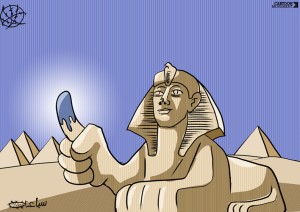
There were few bright spots for the liberal secular movement which played a key role in the 18-day uprising that led Mubarak to stand down and hand power to a council of army leaders. AL ARABIYA – AGENCIES Islamist candidates in Egypt looked Monday to extend their crushing victory in the country’s first parliamentary elections since the toppling of Hosni Mubarak as voters turn out for run-off polls. Last week, residents in a third of districts including Cairo and second-city Alexandria cast ballots at the start of the multi-stage polls, choosing a party and two candidates for a new 498-seat lower house of parliament. In the party returns, Islamists picked up at least 65 percent of votes, with the more moderate Freedom and Justice Party (FJP) in first place with 36.6 percent and the hardline Salafist al-Nur party in second with 24.4 percent. “We welcome the Egyptian people’s choice,” FJP spokesman Ahmed Sobea told AFP on Sunday after the publication of results. “Egypt now needs all parties to cooperate together to get it out of its crisis.” The surge in Salafist groups, which advocate a fundamentalist interpretation of Islam dominant in Saudi Arabia, was a surprise and raised fears among increasingly marginalized liberals about civil liberties and religious freedom. In the individual contests, all but four of the 56 seats up for grabs went into a run-off vote being held on Monday because no candidate succeeded in winning an outright majority. Out of the 52 run-off contests taking place, the Muslim Brotherhood’s FJP said it had a candidate in 45 of them, while al-Nur has 26, meaning they are almost certain to increase their representation in the new assembly. Sunday also brought news of the first violence since voting began when the driver of a liberal candidate died in a gunfight with supporters of the moderate al-Wasat party in the northern Manufia province, local reports said. Brotherhood’s FJP widely forecast to triumph The build up to the election had been ominous, with 42 people killed and more than 3,000 injured in violent protests against the interim military regime that is overseeing the country’s transition to democracy. The Brotherhood’s FJP had been widely forecast to triumph in the first free election in decades. It is the country’s most organized political group despite being officially banned for decades and is well known for its charity work and opposition to Mubarak’s 30-year regime. Leaders were at pains to stress during campaigning that they were committed to multi-party democracy, inclusiveness and civil liberties, while also advocating the application of sharia (Islamic law). Opponents accuse the Brotherhood’s slick campaign machine of flouting a ban on canvassing near polling stations and say it handed out food and medicine to secure votes, but monitors said polling seemed fair overall. “You cannot have democracy and then amend or reject the results,” Amr Moussa, a front-runner for Egypt’s presidency, told Reuters, adding that the shape of parliament would not be clear until the voting was over. But the newcomer Salafist parties formed after Mubarak’s fall trailed them only slightly in the city of Alexandria and won a majority in northern Kafr al-Sheikh and Damietta provinces. Followers of the hardline strain of Islam advocate a stricter segregation of the sexes, the full veiling of women and a ban on alcohol. Parliamentary candidate Abdul-Moneim al-Shahat last week raised hackles when he accused the late Egyptian writer Naguib Mahfouz, a Nobel prize winner, of “inciting promiscuity, prostitution and atheism.” “Since forming our party, it has been the party that worked most on the ground and brought up issues such as education and the economy,” al-Nur’s head Emad Eddin Abdul Ghaffour told AFP on Sunday. Few bright spots for liberals There were few bright spots for the liberal secular movement which played a key role in the 18-day uprising that led Mubarak to stand down and hand power to a council of army leaders. The main liberal coalition, the Egyptian Bloc, won just 1.29 million out of 9.73 million votes cast, or 13.4 percent. Mohammed Hamed, a candidate with the liberal Free Egyptians party, warned that the Islamists would face widespread resistance if they enforced a strict interpretation of Islam. “All the people will turn into the opposition. Most Muslims are not extremist,” he told AFP. The results in Egypt fit a pattern established in Tunisia and Morocco where Islamists have also gained in elections as they benefit from the new freedoms brought by the pro-democracy movements of the Arab Spring. The result has unnerved Israel, concerned about the fate of its 1979 peace treaty with Egypt. Prime Minister Benjamin Netanyahu called on Egypt’s future rulers to preserve the deal. “We hope any future government in Egypt will recognize the importance of keeping the peace treaty with Israel in its own right and as a basis for regional security and economic stability,” Netanyahu said on Sunday. The fate of the peace deal between Egypt and Israel is a concern for its sponsor, the United States, which has backed it with billions of dollars in military aid for both countries. “We are worried,” Israel’s Finance Minister Yuval Steinitz said on Sunday, adding that he hoped Egypt “won’t become an extremist Islamist state because that would put the whole region in danger.” Voting last Monday and Tuesday was only the opening phase of an election that will see the remaining two-thirds of districts go to the polls later this month and in January. Final results are due Jan. 13.


