U.S. ambassador Daniel Benjamin, the U.S. State Department’s coordinator for counter-terrorism, cautioned against alarmism in comments to an international security forum in Algiers. AFP
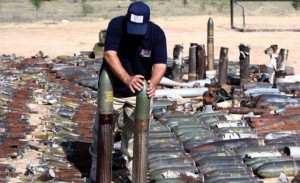
A top U.S. official on Wednesday sought to play down fears that the conflict that toppled Libyan strongman Muammar Qaddafi had allowed extremists to get their hands on weapons used there. U.S. ambassador Daniel Benjamin, the U.S. State Department’s coordinator for counter-terrorism, cautioned against alarmism in comments to an international security forum in Algiers. Host country Algeria is one of several countries to have expressed concern about the proliferation of weapons from the conflict. Only last week, a local extremist group said it had acquired part of Qaddafi’s arsenal. “We have been one of the main beneficiaries of the revolutions in the Arab world,” said Algerian national Mokhtar Belmokhtar, believed to be one of the leaders of Al-Qaeda in the Islamic Maghreb (AQIM). Benjamin responded cautiously to the claim. “Where there is more money available to AQIM in the region and more fighters coming back from other places, then obviously we need to be very very careful and work to ensure that that threat does not grow,” he said. “It is premature to say that it has risen, but I think it is very important to be very cautious and proceed together to ensure that this threat does not increase,” he added. Derrin Smith, the head of a U.S. taskforce looking into the issue of MANPADS (shoulder-launched missile launchers) said Monday there was no clear proof that extremists had acquired such weapons. Delegates also discussed the possible links between AQIM and the Nigerian Islamists of Boko Haram, who have claimed responsibility for a string deadly attacks there. An August suicide bomb attack claimed by the group on U.N. headquarters there killed 24 people. European Union’s coordinator for Sahel strategy, Manuel Lopez Blanco, who attended the conference said the two groups had the “same agenda” and “a probable cooperation in training materials… and movement of their respective elements,” according to the APS news agency. Around 150 security experts are gathered for the Global Counterterrorism Forum (GCTF). “We must be mindful that we will not always agree on every issue, but that those gathered here agree that there are rugent needs and challenges that aren’t being addressed and that each country or organization here today has a unique expertise to contribute,” Benjamin said at the opening session. The gathering is mainly concerned with security issues in the region. It will also look at international cooperation between the police and courts in different countries, how to tackle funding for terrorism and border security, said Sabine Noelte, of Canada’s foreign ministry. The GCTF, which was only launched in September, is co-managed by the United States and Turkey. The meeting gathers specialists from around 30 countries and international organizations for closed-door meetings over two days.

