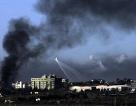
The raid targeted fighters from the Popular Resistance Committees who were laying explosives near the border, witnesses from the hardline faction told AFP. AFP An Israeli air strike targeted Palestinian fighters in the Gaza Strip early on Saturday, sources on both sides said. A security source from the Islamist Hamas movement which controls the territory said that the warplanes struck in the south of the enclave, close to the border with Israel. The raid targeted fighters from the Popular Resistance Committees who were laying explosives near the border, witnesses from the hardline faction told AFP. The witnesses said there were no casualties among the fighters but the Israeli military said that it had confirmed a hit. “A short while ago, Israeli army aircraft targeted a terrorist squad in the southern Gaza Strip,” a statement said. “The squad fired rockets seconds before being targeted. A hit was confirmed.” After a three-week lull at the turn of the year, there has been an increase in the number of incidents on the Israel-Gaza border in recent days. On Friday night, Gaza fighters fired a rocket into southern Israel without causing any casualties or damage. On Thursday, a military spokesman said that Israeli forces arrested three Palestinians overnight as they tried to enter Israel from the southern Gaza Strip. A Palestinian security source said just two men had been held, and said they were captured inside Gaza by Israeli special forces. Also on Thursday, the army said two rockets fired from Gaza hit the southern Eshkol and Shaar Hanegev regions, without causing casualties or damage. Since the beginning of the year, the army says it has counted seven rockets fired into southern Israel. On Wednesday, an Israeli air raid on northern Gaza killed two Palestinians and wounded a third. The military said the raid targeted a group of men who were laying explosives along the border, but Palestinian officials said they were setting traps for birds. Some fear handing power to the parliament would further strengthen the Brotherhood. “We would replace a tyrant with no popularity and a corrupt majority, with a tyrant supported by religious legitimacy and an organized majority,” said Abdel-Gelil el-Sharnoubi, a former Brotherhood member who since last year’s revolution has become a fervent opponent. Ahmed Maher, of the April 6 activist movement, counters that it is the best tactic to draw the Brotherhood away from the military. “They are civilians. We will argue with them, negotiate, fight, whatever,” said Maher. “But with the military council, they will drive over us with armored vehicles.” Despite disagreements, the activists’ main intention remains to use street pressure for the long haul. “It is hard … (but) we are creating a new country, we are creating the future,” said Lobna Darwish, an activist with Mosireen, a media collective that produces most Kazeboon videos. “It is not even a choice − when you see people die … you feel this is a commitment to go on.” At the Kazeboon rally, Mostafa Abou-el-Wafa parked his motorcycle and joined the crowd. He intends to attend the activists’ anniversary rallies, his first ever protest. Nothing has changed under the military, the 26-year-old delivery man said, pointing to a recent bribe he had to pay to get his motorcycle licensed. “The military council has no shame,” he said. “I will go with what these people are saying.”


