SARA GHASEMILEE – EMAN EL-SHENAWI – Al Arabiya – Agencies
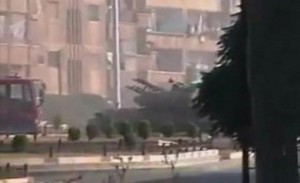
Syrian security forces have killed at least 27 people on Sunday and have carried out sweeping arrests in Deir Ezzor, according to rights activists, as the army continues its insistent crackdown down on anti-government protests in the city. At least 20 civilians have been killed in Deir Ezzor in an assault backed by tanks, while at least seven more have died in a separate tank assault on Hula, a town in the central province of Homs. “The operations are focused on Al Jura district where the army and security forces opened fire, killing at least 20 and wounding dozens of others,” Syrian League for the Defense of Human Rights head Abdel Karim Rihawi told AFP. “About 25 tanks and troop carriers entered Hula and carried out military operations,” another activist, Rami Abdel Rahman, head of the Britain-based Syrian Observatory for Human rights told AFP earlier. Despite rising international condemnation of the attacks which peaked last week on the eve of the Muslim holy month of Ramadan leaving some 150 civilians dead in the city of Hama, embattled President Bashar Al Assad defended what he termed a crackdown on “outlaws.” “To deal with outlaws who cut off roads, seal towns and terrorize residents is a duty of the state which must defend security and protect the lives of civilians,” he said, quoted by state news agency SANA. Rights activists have also said that hundreds of tanks and armored cars have been deployed in Deir Ezzor “Shelling has been heard in several areas” of Deir Ezzor, Rami Abdel Rahman, head of the Syrian Observatory for Human Rights, told AFP. He added that many arrests followed with “dozens” of people being taken into custody. Since the civil unrest that begun in mid-March, Syria’s government has sought to quash the democracy movement with severe force, leaving at least 2,038 people dead, including 389 members of the security forces, according to the Britain-based Syrian Observatory. Meanwhile on Saturday, Syria vowed to hold “free and transparent” polls later this year but re-arrested a leading dissident, as foreign pressure mounted over its deadly suppression of anti-regime protests. Security forces arrested prominent opposition figure and former political prisoner Walid Al Bunni and his two sons, Syrian Observatory for Human Rights chief Rami Abdel Rahman said. In 2000, Mr. Bunni was one of the prime movers of the short-lived “Damascus Spring” amid hopes for reform after Bashar Al Assad became president following the death of his father Hafez. The arrests came just hours after Damascus Saturday vowed to hold “free and transparent” elections by the end of 2011. Like previous reform promises, the new announcement is unlikely to have much resonance with Syria’s opposition, which says it has lost all confidence in President Assad’s overtures. The four-year term of the current parliament expired earlier this year and Mr. Assad is expected to set a date for new legislative elections before the end of 2011. Mr. Abdel Rahim said earlier that hundreds of tanks and armored cars had been deployed in the northeastern city of Deir Ezzor and around Homs in central Syria. “Syria will hold free and transparent elections that will give birth to a parliament representing the aspirations of the Syrian people,” Foreign Minister Walid Muallem said in a meeting with ambassadors posted to Damascus. “The general elections will be held before the end of the year,” Mr. Muallem said, quoted by the official SANA news agency. The foreign minister stressed “the commitment of the Syrian leadership to the continued reform process and implementation of measures announced by Assad.” “The ballot box will be the determining factor and it will be up to the elected parliament to review adopted draft bills to decide on them,” Mr. Muallem said. But Syria was coming under increasing international criticism over the bloody siege of Hama, launched last Sunday after residents calling for Mr. Assad’s ouster took over the city of 800,000 and barricaded it against regime forces. Activists said Saturday that security forces killed 24 people around the country a day earlier. UN leader Ban Ki-moon told Mr. Assad to immediately end his deadly military campaign against opponents. “In a phone conversation with President Assad of Syria today, the secretary general expressed his strong concern and that of the international community at the mounting violence and death toll in Syria over the past days,” said UN spokesman Martin Nesirky. Mr. Ban “reflected to the Syrian president the clear message sent by the Security Council and urged the president to stop the use of military force against civilians immediately,” Mr. Nesirky said. Saturday’s phone call comes days after the UN Security Council overcame deep divisions and condemned Damascus’ bloody crackdown on civilian protesters, the 15-nation body’s first substantive action on Syria’s five-month-old uprising. Mr. Ban has been trying for months to speak with Mr. Assad, UN officials have said, but the Syrian president had been refusing to take his calls. The last time the secretary-general spoke with Assad was in May, when he told Mr. Assad to end the violent crackdown against pro-democracy demonstrators. Mr. Ban also reiterated previous UN demands that Mr. Assad allow missions from international humanitarian agencies and the Office of the High Commissioner for Human Rights into the country. The embattled president issued a decree on Thursday allowing opposition political parties, but the move was largely dismissed by the opposition as a ploy to appease protesters. The oil-rich Arab monarchies of the Gulf on Saturday also turned up the heat on Damascus, with the six-nation Gulf Cooperation Council calling in a statement for an “immediate end to violence… and bloodshed.” They urged a “resort to wisdom and introducing serious and necessary reforms.” Their call followed a pledge by the US, French and German leaders to consider new steps to punish Syria after a deadly crackdown on the first Friday of Ramadan, the holy Muslim month of fasting. US President Barack Obama spoke separately to France’s Nicolas Sarkozy and German Chancellor Angela Merkel as Western nations cranked up pressure on Assad. They “condemned the Assad regime’s continued use of indiscriminate violence,” the White House said. They “also agreed to consider additional steps to pressure the Assad regime and support the Syrian people.” The Syrian government has sought to crush the democracy movement with brutal force, killing around 1,650 civilians and arresting thousands of dissenters, according to the Syrian Observatory for Human Rights. Mr. Abdel Rahman of the Syrian Observatory said around 250 tanks and armored cars were deployed in four districts of Deir Ezzor on Saturday. The tanks were also posted around the airport in Deir Ezzor, many of whose residents started to flee the city from Wednesday, fearing imminent military action. In Homs, “many armored cars and other army vehicles have been posted in the Bab Al Sibaa district,” Mr. Abdel Rahman said, adding that activists in the city reported gunfire from early morning. Communications have been cut off as the army stepped up an operation to crush dissent in Hama, the central city where security forces killed at least 30 civilians and wounded dozens more, earlier in the week. The call for Friday’s protests came from activists on Facebook group The Syrian Revolution 2011, a driving force behind the demonstrations that have been calling for greater freedoms since mid-March. In Damascus and other cities, mourners held funerals Saturday for several of those killed on Friday. Amateur videos posted online by activists showed crowds marching in the funeral procession of a teenager who was killed in the Damascus neighborhood of Midan. Some of the mourners shouted “Allahu Akbar,” or God is great, and “there is no God but God and Assad is his enemy.” Syria’s state-run SANA news agency said funerals were also held for six soldiers and members of the security forces who were gunned down by “terrorist groups” and gunmen in Homs, Hama and the northern province of Idlib.

