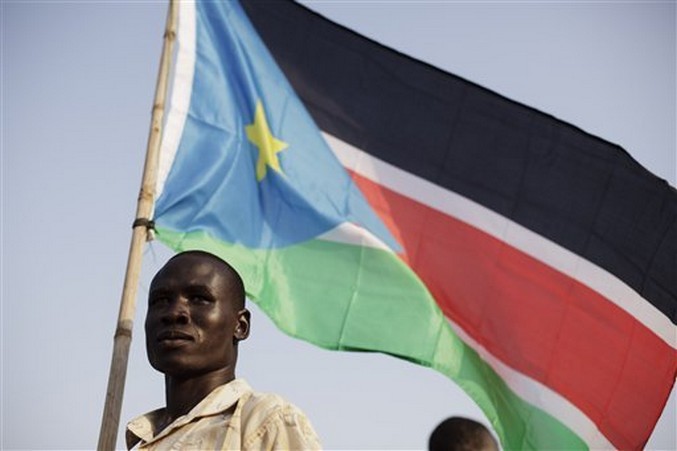
The South split from Sudan in July, taking with it 75 percent of the country’s oil production of 470,000 barrels per day, but despite its oil wealth the new state lacks the infrastructure to refine and export oil. AL ARABIYA – AGENCIES
South Sudan has ordered the shutdown of oil production amid a deepening row with Khartoum over pipeline fees, the government said Friday. “The government has instructed the minister of petroleum and mining to proceed with arrangements for a complete shutdown of oil production,” Minister of Information Barnaba Marial Benjamin told AFP Friday. “The council of ministers decided today that in light of the present quantities of oil being taken by Khartoum” it would halt production, he added. The South split from Sudan in July, taking with it 75 percent of the country’s oil production of 470,000 barrels per day, but despite its oil wealth the new state lacks the infrastructure to refine and export oil. Sudan and South Sudan are locked in a row over sharing oil revenues after Juba took two-thirds of output when it became independent. The landlocked new African nation needs to use a northern pipeline and port to export the crude but has failed to reach an agreement with Khartoum over a transit fee, prompting Sudan to seize part of its oil as compensation, according to Reuters. The former civil war enemies — now regional neighbors — have exchanged repeated tit-for-tat accusations in a bitter spat during dragging oil negotiations, raising tensions between the two sides. However, Benjamin said shutting down production would not be immediate, and that South Sudanese President Salva Kiir would meet with Sudanese President Omar al-Bashir before it was stopped. “It is not just closed like a door-key…. it cannot be less than seven days,” he said of the planned shutdown. “The council has also agreed that President Kiir will meet Omar al-Bashir at the African Union in Addis Ababa on Jan. 27.” Oil companies in South Sudan include Nile Petroleum Corporation, wholly-owned by the Juba government, and Petrodar Operating Company, which is owned mainly by China National Petroleum Corporation (CNPC), Petronas of Malaysia, Sudapet of Sudan and SINOPEC of China. China, which relies on South Sudan for nearly five percent of its oil, is supporting negotiations between the two sides in the Ethiopian capital. Sudan is demanding $1 billion for unpaid transit fees since July plus $36 a barrel in the future as transit fee, roughly a third of the export value of southern oil. Khartoum also wants Juba to share Sudan’s external debt of $38 billion. South Sudan pumps around 350,000 bpd, officials have said. Sudan produces 115,000 bpd in its remaining fields but needs it for domestic consumption. Sudan’s government is under pressure to overcome a severe economic crisis after losing the southern oil, which made up 90 percent of the country’s exports. It generated $5 billion in oil revenues in 2010. Juba has offered Sudan the sale of discounted oil and other financial help, but neither side shows sign of shifting their positions.

